How to Understand the Roles Behind a Web Project
SEO, UX, frontend, backend, analytics, AI, automation, project management... they can all show up in one project brief, but it's not always obvious what each role does or which ones matter most.
You are not silly for finding this confusing.
It is genuinely confusing.
A System of Roles
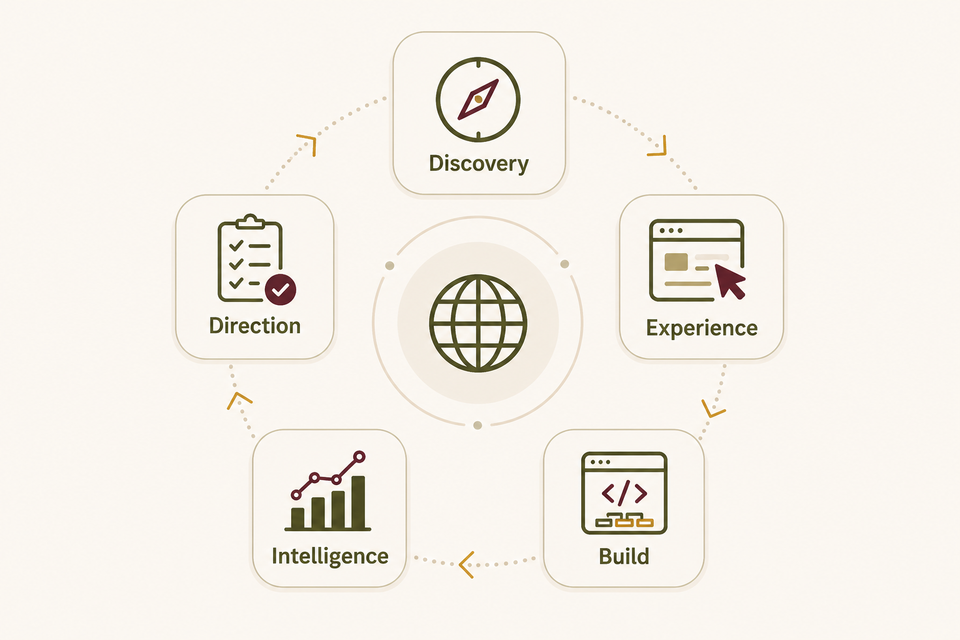
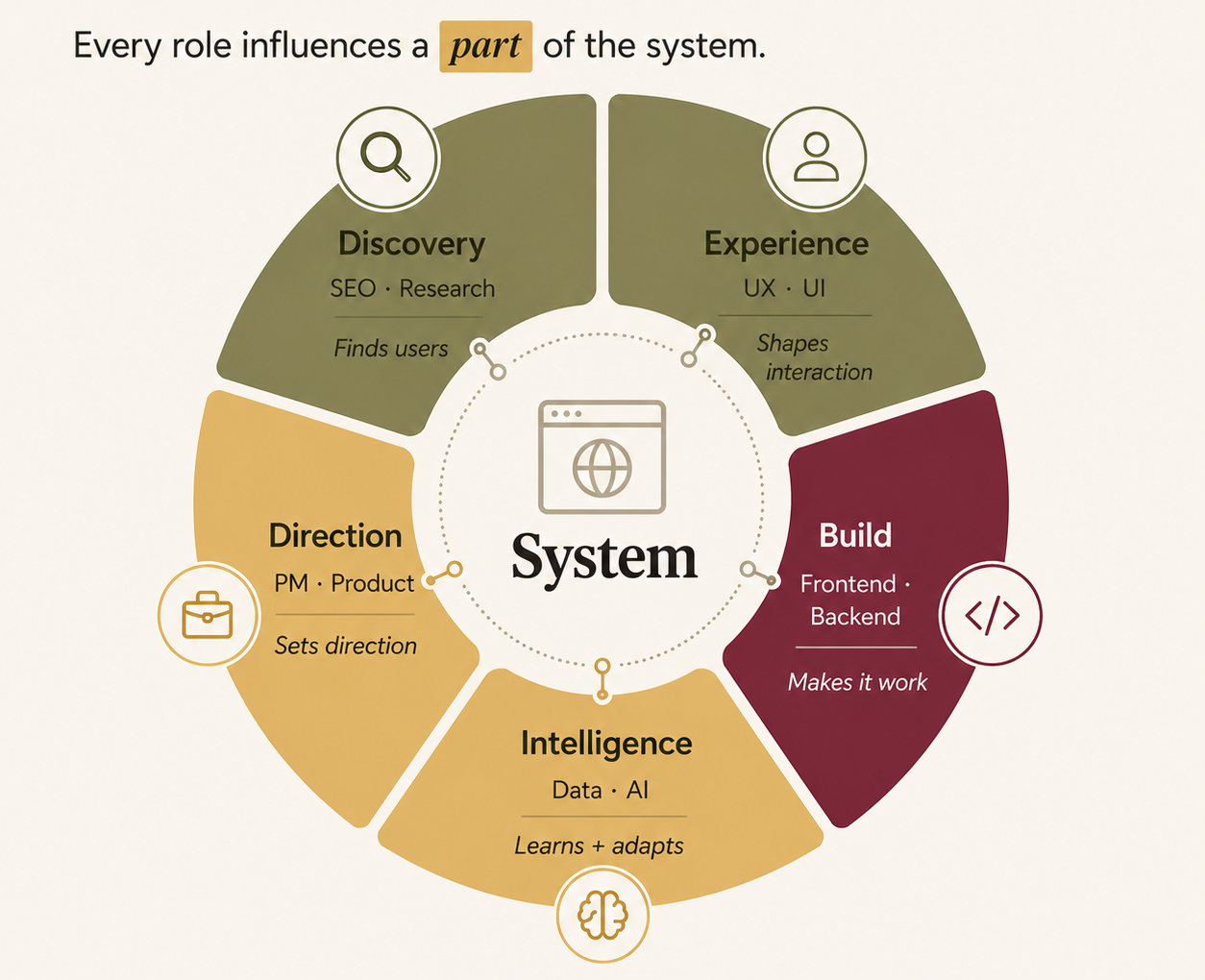
I usually think about web projects through five connected parts:
- Discovery — how people find the system
- Experience — how people understand and use it
- Build — how the system works
- Intelligence — what the system learns or measures
- Direction — what gets prioritized and why
This can be seen as a loop, but there isn't really a start or finish line here. The system should feed itself and pinball around these connected parts as needed to complete the project.
Roles Aren't Always Separate People
A role is simply a function that needs to be covered. On a large project, that could mean hiring separate specialists. On a smaller project, one person may cover several roles.
The important thing isn't about having every title in the room, but making sure the system has the right coverage.
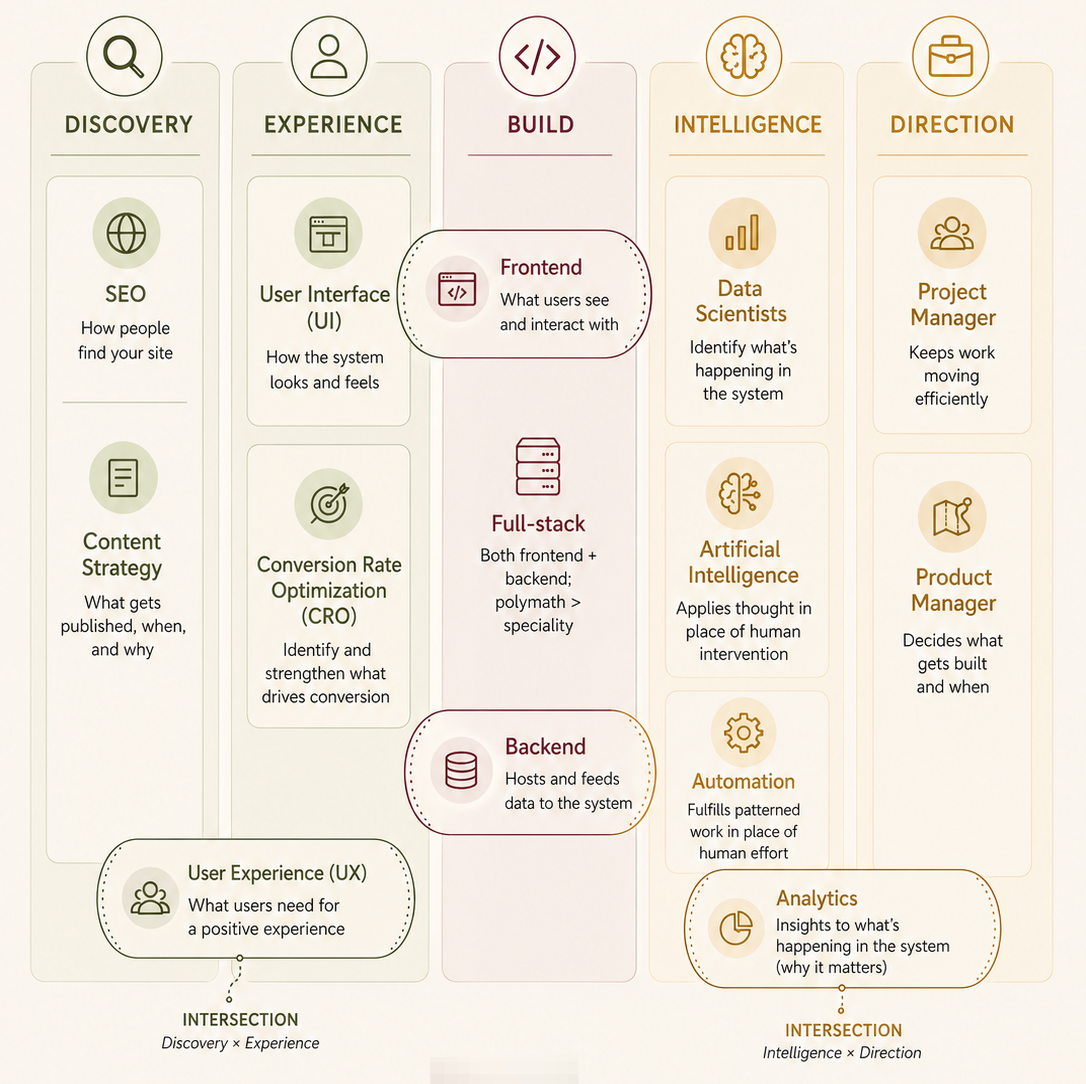
This is where a lot of project planning gets fuzzy; people start with job titles instead of defining what the project actually needs.
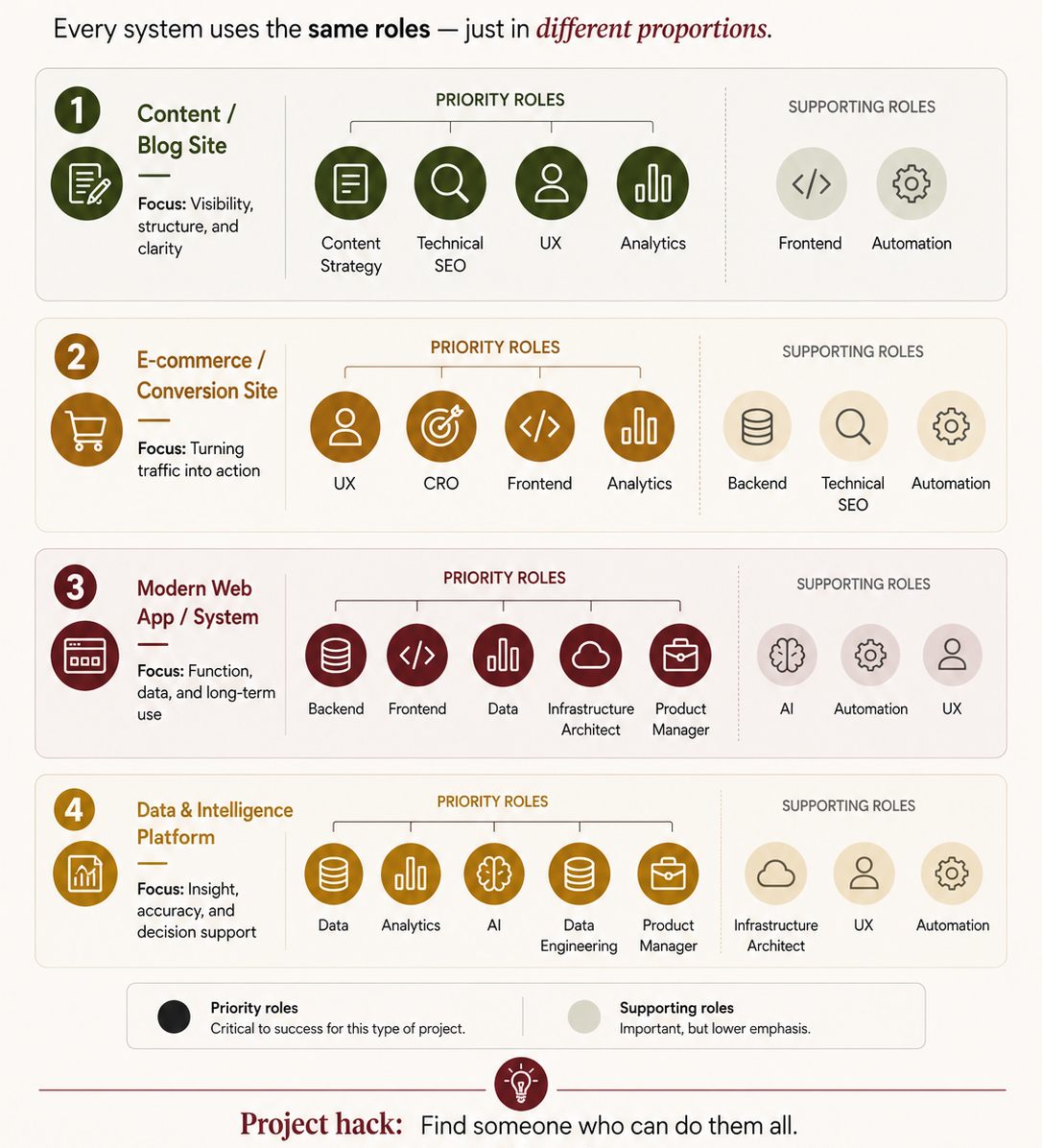
- A content-heavy project will need strong discovery and structure
- A conversion-focused project will need stronger UX, frontend, analytics, and CRO
- A web application will need a deeper build, data specialty, and product coverage
The roles are not necessarily interchangeable, but they are very connected.
Systems Break Between Roles, Not Within Them
This is the part I wish more project plans accounted for.
When roles are treated like separate lanes, the gaps between them become a critical risk.
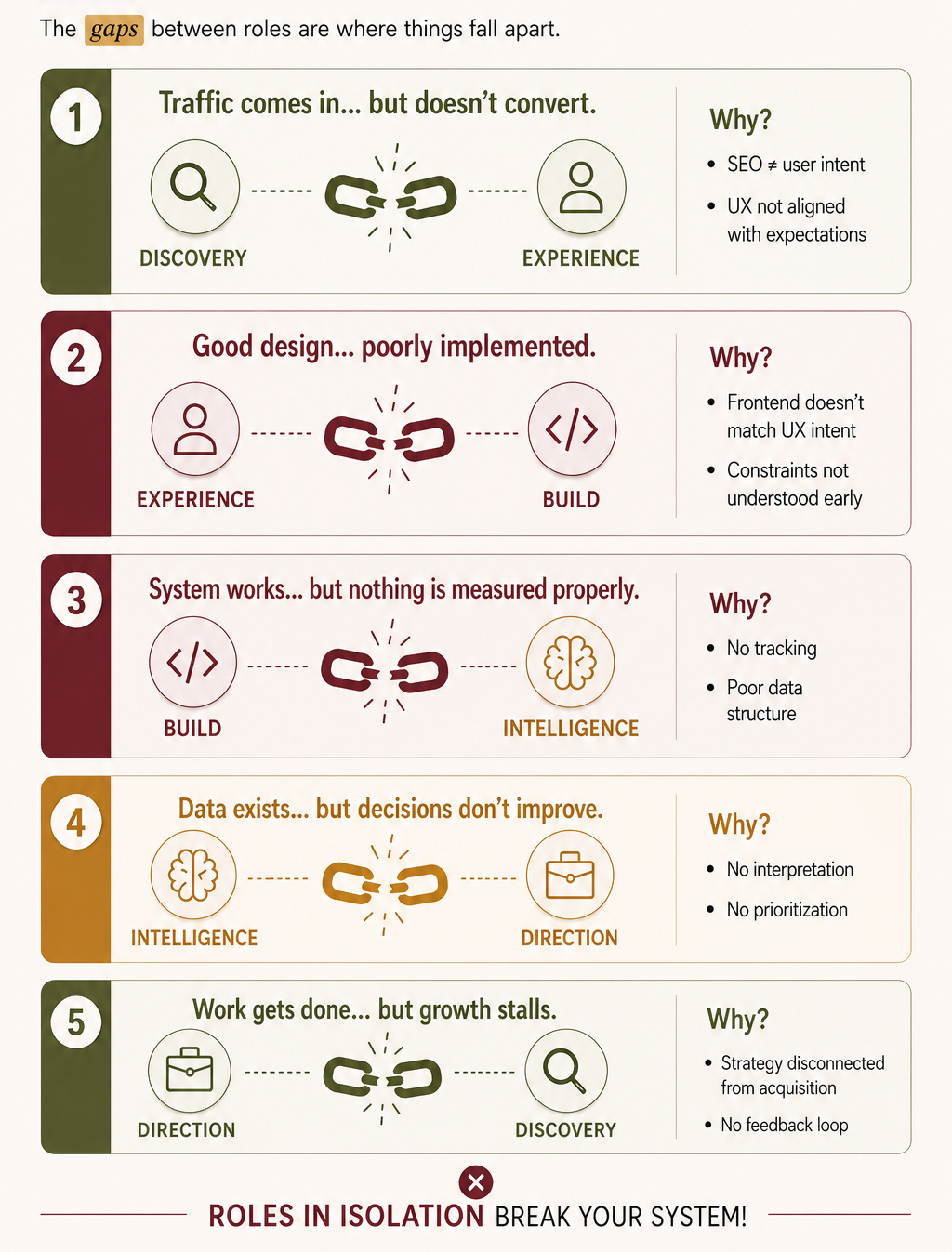
Most breakdowns do not happen because a specific role was useless or one person lacked skill. More often than not, breakdowns happen when handoff between roles is unclear.
That's the key difference: breakage isn't a people problem, it's a system problem.
Different Projects Need Different Coverage
Not every web project needs every specialist.
That's how things get expensive, overbuilt, or confusing!
The better question is:
What does this project need most?
A Simple Way to Choose Where to Start
When a project feels unclear, I like to start with the main constraint and continue the conversation from there.
Ask:
- Is the problem visibility?
- Start with discovery: SEO, content strategy, technical SEO.
- Is the problem usability?
- Start with experience: UX, UI, IA, CRO.
- Is the problem functionality?
- Start with build: frontend, backend, full-stack.
- Is the problem measurement?
- Start with intelligence: analytics, data, AI, automation.
- Is the problem decision-making?
- Start with direction: product, project management, strategy.
- Is the problem maintenance?
- Look at the connections between all of them.
(That last one is usually where the toughest work hides itself)
Cover the System
A web project does not always need a bigger team. In fact, proper role coverage can be simpler for everyone with a few thoughtful hires.
The best setup is the one that gives the project enough discovery, experience, build, intelligence, and direction to move forward without creating unnecessary complexity.
Sometimes that means bringing in specialists with strong communication. Sometimes it means finding someone who can work across several parts of the system and understand how the pieces affect each other.
The goal is to build something that works, not to collect roles!
Need help figuring out what your project actually needs?
I help make technical work easier to understand, plan, and maintain.
Start with a conversation, or keep an eye on MannyRoy.com for more practical guides on navigating this wild, wild web.